top of page

Hello everyone,


It’s been another exciting couple of weeks in Earth Science! As we continue our journey from the “top of the world” down into the layers beneath our feet, students have been diving deep into the processes that shape our planet, from mountain building to earthquakes and everything in between.


WHERE WE WERE

We started our Earth's History & Processes unit, and explored Mount Everest and discussed how mountains like it are formed and continue to change over time. Students developed our Driving Question Board by sharing their own ideas about shrinking and growing mountains, along with other landforms that change. We looked at examples from around the world and began asking bigger questions about why Earth’s surface is always shifting.


WHERE WE ARE

Students analyzed evidence from an earthquake in Ridgecrest, CA, using Notice and Wonder routines to think through patterns in earthquake activity. This helped us build a foundation for how scientists use data to understand motion beneath Earth’s surface. We used the Seismic Explorer tool and a Mining Storymap to collect data on Earth’s materials. Students then discussed how this evidence connects to our growing questions about plate movement and mountain change. We've discussed the types of materials we'd find at and below the Earth's surface, and how these materials might change depending on location, and how they could be related to some earthquake activity.


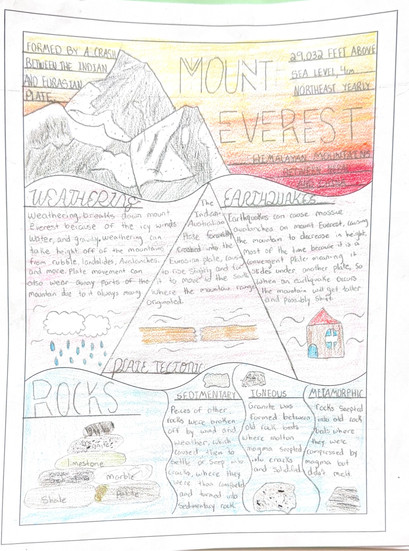
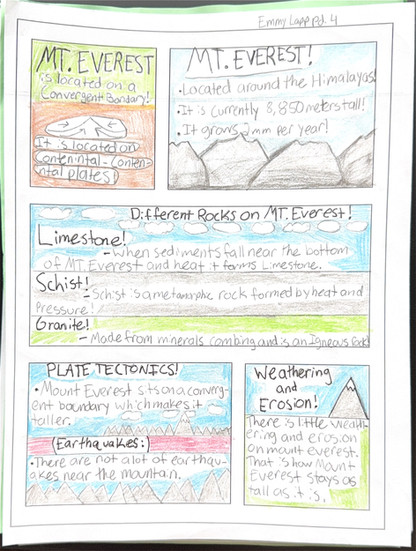
Finally, we spent time rotating through our Earth's Structure stations. Students learned how scientists know what Earth is made of, even though we cannot dig to the center. These hands-on stations and discussions helped us build a shared understanding of Earth’s interior and set us up for our next steps in explaining mountain movement. Students were introduced to Earth's Layers and the three main types of rocks, igneous, sedimentary, and metamorphic, which we'll go into how these are significant in Earth's History later on.


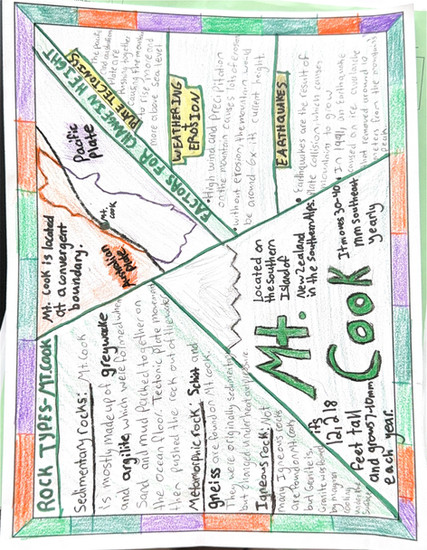
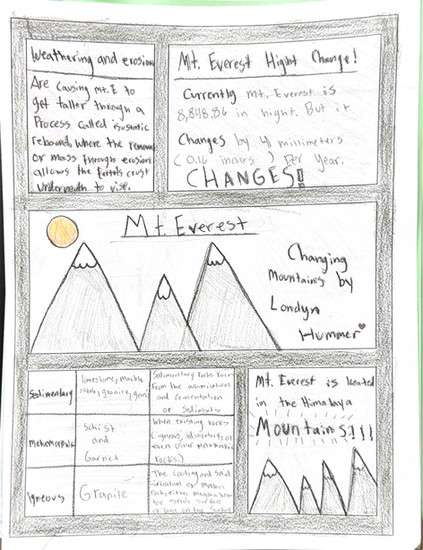
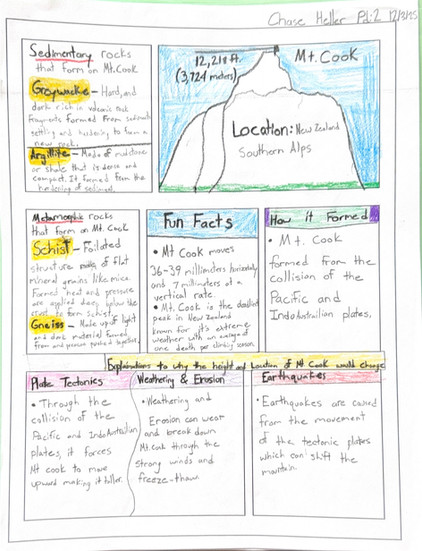
Below: Photos from our Station Rotations


WHERE WE ARE GOING

Next week, we’ll launch into modeling tectonic plate motion and their interactions. Students will explore continental drift and investigate the clues scientists have used to piece together Earth’s moving past. They’ll engage in a CER (claim, evidence, reasoning) activity to model and explain how continents have shifted over millions of years.


We’ll also take a closer look at Earth’s structure, plate boundaries, rock types, and learn to recognize the patterns that help scientists predict where natural disasters like earthquakes and volcanic eruptions are most likely to occur. It’s going to be full of discovery, discussion, and hands-on learning as we continue rockin’ out to the core!


If you have any questions or want to connect further, please feel free to reach out at curtis_catwood@conestogavalley.org. You can also follow our classroom adventures on Instagram at @classwithcatwood, where I share updates and snapshots of what we’re learning.


Stay Gold,

Mr. Catwood


  • Oct 27, 2025

Hello everyone,


It’s been an exciting couple of weeks in science! We’ve been finishing up our Astronomy Unit with hands-on experiments, creative projects, and plenty of great discussions about how motion, force, and energy connect everything in our universe. As we start a brand-new marking period, we’re shifting our focus to a fresh topic, Earth’s History & Processes, where the story moves from outer space to right here on our planet.


Where We Were

Over the past two weeks, we explored how gravity keeps our universe in motion. We focused on orbits and gravity through interactive lessons and demonstrations that helped us connect what we see in space to the physical forces that shape movement.


We also had some fun with a big “what if” question: What would happen if the Moon were smaller, larger, or closer to Earth? This writing prompt led to some amazing ideas and sparked curiosity about how gravity shapes our world. We tried a simplified Two-Object System Simulation to see how gravitational pull changes motion between objects in space. Then, students rotated through Gravity Stations to explore how gravitational force, motion, and mass interact in different ways.


Students also took part in several hands-on demonstrations. The Cart Demo showed how force and mass affect acceleration. The Projectile Motion and Penny Drop helped us visualize how gravity pulls objects while they move forward, just like planets orbiting the Sun. And of course, the Alka-Seltzer Rocket Launch was a class favorite, showing how thrust can overcome gravity to lift a rocket.


Below: Mr. Roberto (our Student Teacher) leading some of the demos.


We ended the unit with our Architect of a Solar System Project, where students became the architects of their own solar systems. They designed stars, created planets, and explained how gravity keeps everything in balance. It was such a creative and engaging way to finish our Astronomy Unit and kick off Marking Period 2.


Where We Are

Right now, students are presenting their Architect of a Solar System projects and showing what they’ve learned about motion, orbits, and gravity. Each project has been unique, and it’s been great to see how much thought and imagination went into them. Last week, we wrapped up any missing work to help everyone start this new marking period on the right track. Photos of the Architect of a Solar System project will be up on my class Instagram soon!


Where We Are Going

Next, we’re shifting our focus from the motion of planets to the motion of Earth itself as we begin our Earth’s History & Processes Unit. Our new anchoring phenomenon asks, What is causing Mt. Everest and other mountains to move, grow, or shrink?


Students will start by locating Mount Everest on a world map and reading about how it’s changing each year. They’ll look at data from other mountains around the world and compare how they’re changing like Mount Everest. Together, we’ll build models and brainstorm ideas about why these changes are happening, creating a class Driving Question Board to guide our investigations. This new unit has students start to learn and explore the forces that are deep within the planet that help us understand what’s happening right beneath our feet.


If you have any questions or want to connect further, please feel free to reach out at curtis_catwood@conestogavalley.org. You can also follow our classroom adventures on Instagram at @classwithcatwood, where I share updates and snapshots of what we’re learning.


Stay Gold,

Mr. Catwood


Hello everyone,


I know it’s been four weeks since my last update, but the last time I was about to send this out, our team newsletter went out too, and I didn’t want to flood your inbox with emails! So here’s a fresh look at what’s been happening in our science classroom lately.


Where We Were

We recently wrapped up our exploration of solar and lunar eclipses and examined how atmospheric interactions cause the beautiful changes in color and light we see during those events. Students completed our Milky Water Lab, which modeled how particles in Earth’s atmosphere scatter light, helping them visualize why the sky looks blue and why sunsets and eclipses display those stunning red and orange hues.


Where We Are

Right now, we’re learning how scientists study space using the electromagnetic spectrum, focusing especially on visible light and infrared waves. Students have been connecting how tools like telescopes and satellites detect different types of light to help us understand objects in our solar system and beyond, even when we can’t see them with our own eyes.


Where We’re Going

Next, we’ll begin investigating orbits and gravity, specifically how gravity holds everything together, from keeping planets in orbit around the Sun to maintaining the structure of entire galaxies. This topic will help us connect all our previous learning about motion, light, and space into one big picture of how our universe works.


If you have any questions or want to connect further, please don’t hesitate to contact me at curtis_catwood@conestogavalley.org. You can also follow our journey on Instagram at @classwithcatwood, where I share updates and snapshots of our exciting classroom activities.


Stay Gold,

Mr. Catwood


© 2025 by Curtis Catwood. Created with Wix.com

bottom of page