top of page

Hello everyone,


Wow, what a stellar time we’ve been having in science class! We’ve wrapped up some exciting projects, had plenty of hands-on learning, and are gearing up for even more cosmic adventures. Whether creating artistic displays or exploring gravity with hands-on demos, your students are diving into Astronomy enthusiastically! Here’s a fun recap of what we’ve been up to and a peek at what’s on the horizon.


Where We Are:

Recently, we wrapped up the Origins of Earth poster board project, and I have to say, your students knocked it out of the park! They researched, designed, and presented beautiful displays showcasing their understanding of how Earth and the Solar System came to be. We topped it all off with a gallery walk, where students checked out each other’s work and learned about the various topics. It was incredible to see them teaching and learning from one another in a fun, collaborative way.


Below are photos of some of the projects:


But that’s not all! We’ve also been diving deep into the world of gravity and forces. We did some awesome demos and station rotations (Check out the Insta for some reaction videos to the Alkaseltzer Rockets demo!), where students got the chance to wrap their minds around how gravity works. Students experienced firsthand the invisible but mighty force that governs so much of our universe. It’s been a blast seeing those lightbulb moments!


Where We’re Going:

Up next, we’re blasting off into space (not literally, of course)! We’ll be exploring Celestial Bodies, including planets, dwarf planets, moons, asteroids, comets, and even space debris. Your student is about to become an expert on all things out there in the vast universe. We’ll also be working on understanding the scale of the universe and how objects in space move, guided by Kepler’s Laws of Planetary Motion.


To make things even more fun, we have an exciting Poem/Parody song project coming up where students will creatively express what they’ve learned about celestial bodies. So, don’t be surprised if you start hearing space-inspired tunes at home! This is one of my favorite projects, and I write my own parody songs that I "sing" in front of the class on the day of presentations! After that, we’ll be focusing on stars like our own sun as we prepare for our first big unit test.


Overall, your students are doing an amazing job exploring "big picture" Astronomy, before we focus on local interactions between the Earth, Sun, and Moon.


If you have any questions or want to connect further, please don’t hesitate to reach out to me at curtis_silverwood@conestogavalley.org. You can also follow our journey on Instagram at @classwithcatwood, where I share updates and snapshots of our exciting classroom activities.


Thank you for your time,

Mr. Catwood (formerly Silverwood)


  • Sep 18, 2024

Hello everyone,


Welcome back to our science blog! I’m excited to share the incredible adventures your students are embarking on in our classroom. As we dive into the mysteries of the universe, I can already see their curiosity shining bright! Let’s look at what we’ve been exploring and where we’re headed next.


Where We Are:

Lately, we’ve been focused on space exploration and the expansion of the universe. Our journey began with the question: How do we learn about distant stars, galaxies, and celestial bodies? The answer lies in incredible tools like the James Webb Space Telescope, other telescopes, and various technology.


Students have been investigating how telescopes can help us study electromagnetic radiation—think visible light, radio waves, infrared, and more—to uncover the secrets of the cosmos. We’ve learned about types of telescopes and Visible Light using spectroscopes, which gave us some understanding about how telescopes use electromagnetic radiation to study the universe. Students have begun to grasp the concepts we've been discussing and are making great progress!


Below are images from our Spectroscope Activity. We looked at a light source, red, blue, yellow, and black objects to see which colors appear in the visible light spectrum when observing these object. We also looked at different element's spectra to figure out what elements were present in unknown objects. Something that Astronomers use to tell which elements are found in a distant object.


Where We Are Going:

We’re embarking on our “Origins of the Earth” project! This hands-on exploration will take us into the fascinating history of our planet, examining how the sun, solar system, and Earth came to be. The students will research various topics related to the formation of our planet and what makes Earth habitable.


For this project, each student will create a poster board presentation. They’ll research their assigned topic and then share their findings in a gallery walk format, where classmates can take notes on the 8 selected topics that contribute to Earth becoming habitable. It’s a wonderful opportunity for collaboration and creative expression, and I can’t wait to see the impressive displays they come up with! (Pictures to come!)


Following the “Origins of the Earth” project, we’ll shift our focus to exploring galaxies and other large-scale astronomical phenomena. This will set us up nicely for our first unit test, scheduled for mid-October. I encourage everyone to engage in conversations at home about these topics; your support means the world!


If you have any questions or want to connect further, please don’t hesitate to reach out to me at curtis_silverwood@conestogavalley.org. You can also follow our journey on Instagram at @classwithcatwood, where I share updates and snapshots of our exciting classroom activities.


Thank you for being such an integral part of our learning community!


Mr. Catwood (formerly Silverwood)


Hello everyone!


This is the first blog post of the year! I have thoroughly enjoyed getting to know all the new students this year! We have a great bunch, and we have been diving into thinking like scientists already! 😊


8th grade has converted to ALL Earth Science as we undergo curriculum changes, which happens to be my area of expertise and my favorite type of science!


Our units include:

  • Astronomy

  • Earth's History

  • Earth's Processes

  • Earth's Waters

  • Weather & Climate

  • Earth's Resources

You can learn more about the course here in my Syllabus.


Students have been doing activities in our Pre-Unit to Astronomy, Intro to Earth Sciences. This is to build some excitement and introduce topics we'll explore throughout the year. When we move into Astronomy next week, we'll start by learning how scientists study space and the universe!


Each year, I try to reduce printing, and this year, we will be using Digital Notebooks. They are guided notebooks, but they help reduce paper, and best of all... STUDENTS DON'T LOSE THEIR NOTES! It is so helpful to have notes this way. I've researched the effectiveness, which it is more effective than traditional handwritten notes. This is because digital notebooks allow for some customization by adding slides, images, gifs, and notes that help students understand a topic better. There will be a learning curve for some at the start of the year, but students quickly get the hang of it and enjoy using them.


Some non-science-related notes! I run the On Wednesdays We Wear... Campaign at school. Here is a calendar of the organizations we will raise money for throughout the year. Students do not need to donate but can during school lunches on Wednesdays. This month, we are wearing Blue on Wednesdays and raising money for the Boys & Girls Club of Lancaster.

If you ever have any questions, feel free to reach out to curtis_silverwood@conestogavalley.org 


Families, please note that I got married this summer. We are combining our last names, and the legal process for the change is definitely going to take some time. In class, I've been going by what my name will be, Mr. Catwood, but my contact info at the school still has my former last name. Eventually, this will change, but for now, it is still curtis_silverwood@conestogavalley.org.


You can follow @ClassWithCatwood on Instagram to see pictures of the classroom and photos of our class activities.


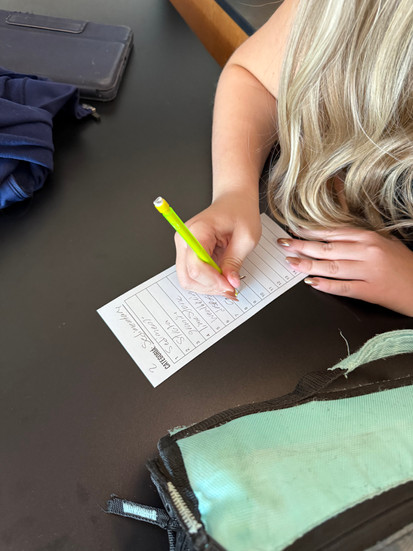
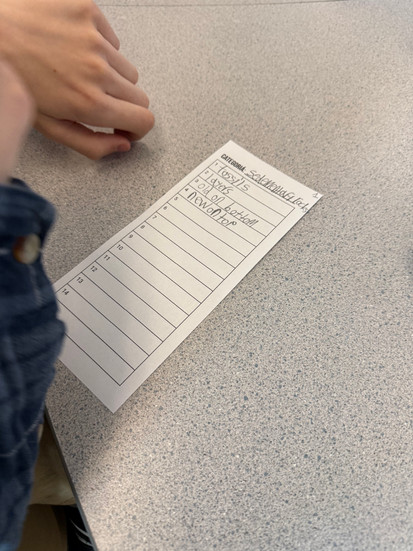
Below are images of a post-it note activity we did at the start of last week to discuss "What is Science?"


Thank you,

Mr. Catwood

(formerly Silverwood)


© 2025 by Curtis Catwood. Created with Wix.com

bottom of page