
ROCK-iNG TOWARD BREAK
- Dec 5, 2025
- 2 min read
As we get closer to break, the excitement is definitely in the air, but our students are still staying focused and engaged with some big geology topics. Even with the holiday season approaching, they continue to show curiosity and effort as we build toward the end of our Earth’s History and Processes unit.
Where We Were
Recently, students completed their Earth’s Structure quiz, which wrapped up our major focus on plate tectonics and Earth's layers. They used their understanding of plate boundaries, continental drift, and seismic activity to show what they have learned. This assessment marked the end of our tectonics work and helped set the stage for our shift into the rock cycle.
Where We Are
Last week, we shifted into rock types and the rock cycle. Students explored how rocks form, break apart, and transform through Earth’s processes. One of the highlights was a hands-on role-playing dice game where students moved through the rock cycle as sediments, magma, igneous rocks, metamorphic rocks, and more.
Below: Some photos from a mini-lab we were completing in Core Extension.




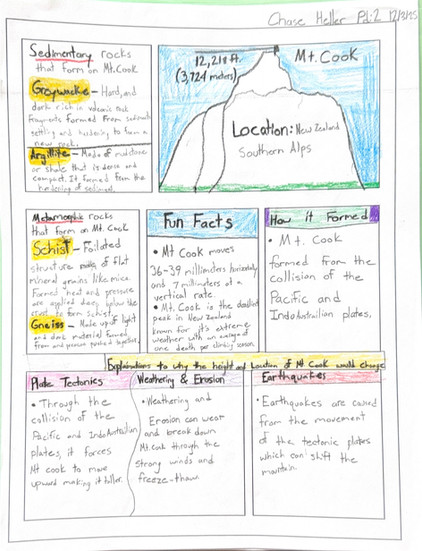
This week, students also used their knowledge of plate tectonics and the rock cycle to begin creating their "Changing Mountains" one-pager. They selected one of the mountains we studied earlier in the unit. They explained why that mountain is changing over time, how materials cycle through the geosphere, and how different geologic processes shape its past, present, and future.
Below: Some photos of completed one pagers.


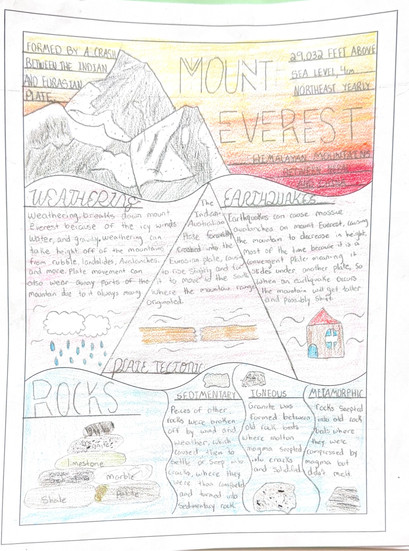




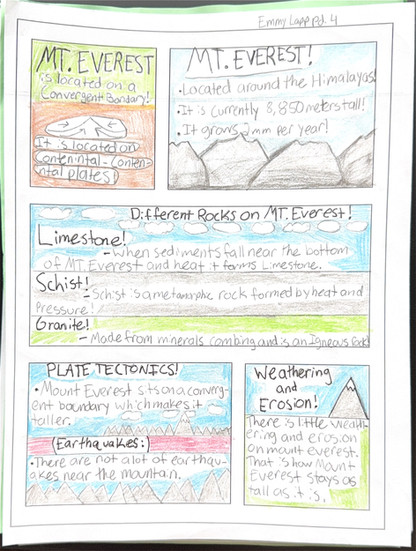






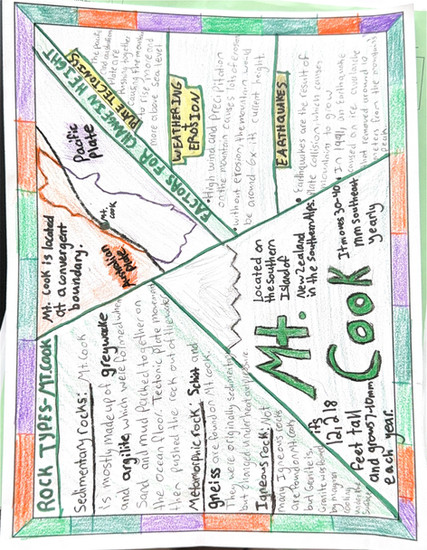





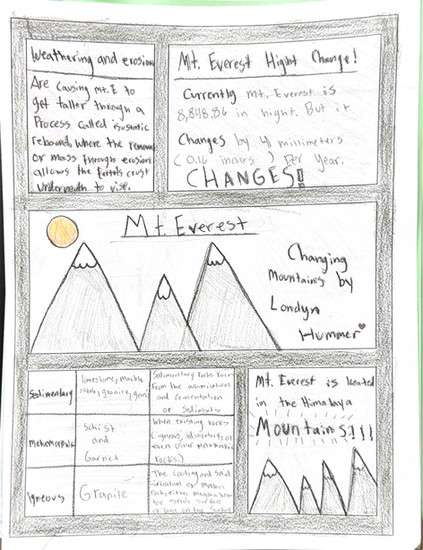

We have now begun investigating index fossils and how they allow scientists to determine the age of rock layers or strata. Students are learning why certain fossils are so important and how they help us place geologic events in order.
Where We Are Going
We are heading deeper into Earth's past by exploring the Geologic Time Scale and how scientists organize 4.6 billion years of history. Students will also complete a stratigraphy lab to apply their understanding of rock layers and fossil evidence. We will wrap up the unit with our Analyzing Fossils project, where students will use everything they have learned about rocks, fossils, and geologic processes to interpret the story preserved in ancient remains.
If you have any questions or want to connect further, please feel free to reach out at curtis_catwood@conestogavalley.org. You can also follow our classroom adventures on Instagram at @classwithcatwood, where I share updates and snapshots of what we’re learning.
Stay Gold,
Mr. Catwood
Comments